Insights into Digital Finance Trends

custom sticker collections
General

How Artists Can Increase Sales with Custom Sticker Collections

For modern artists, making great work is only half the journey—selling it is the other half. Whether you’re an illustrator, digital artist, painter, or designer, finding affordable and scalable ways to monetize your creativity is essential. One of the most effective and often overlooked methods is creating custom sticker collections. Stickers turn artwork into accessible, collectible, and highly marketable products. They are small, affordable for customers, and incredibly versatile for artists looking to expand their income streams. In this guide, we’ll explore how artists can increase sales with sticker collections and why custom stickers have become a powerful tool in the creative economy. Why Stickers Are a Perfect Product for Artists Unlike large prints or original artwork, stickers are low-cost, easy to produce, and appeal to a wide audience. They allow fans to own a piece of your art without spending a large amount of money. Here’s why stickers work so well: Low production cost, high profit margins Easy to ship and store Attractive to impulse buyers Ideal for online and in-person sales Great for building brand recognition Because of these advantages, stickers are one of the most beginner-friendly products for artists entering the merchandise market. Turning Artwork into Collectible Sticker Sets Instead of selling single designs, artists can increase sales by creating themed sticker collections. A collection adds value by turning individual pieces into a cohesive product line. Popular collection ideas include: Character series Seasonal themes (winter, summer, festivals) Aesthetic packs (pastel, dark fantasy, minimal art) Emotion-based collections (happy, sad, chaotic art styles) Collections encourage customers to buy multiple items at once instead of just one sticker. This significantly increases average order value. For example, a set of five related designs can feel more valuable than a single isolated sticker. Expanding Audience Reach Through Affordable Art Not everyone can afford original paintings or expensive prints. Stickers bridge that gap by making art more accessible. When artists offer Custom Stickers, they: Reach younger audiences Attract casual buyers Encourage first-time customers Build long-term fans A customer who buys a sticker today might return later for prints, commissions, or digital downloads. Stickers act as an entry point into your creative world. Building a Recognizable Artist Brand In today’s crowded digital space, artists need strong personal branding. Sticker collections help reinforce your style and identity. Every sticker acts as a mini representation of your brand. When customers place your stickers on laptops, water bottles, or notebooks, your art travels with them. Over time, this creates: Increased visibility Organic marketing Stronger brand recall Emotional connection with fans Consistency in style across your sticker collections is key to building recognition. Increasing Sales Through Limited Edition Drops Scarcity is a powerful marketing tool. Artists can boost sales by releasing limited-edition sticker collections. For example: “Only available for 2 weeks” drops Seasonal exclusive designs Collaboration collections with other artists Numbered or signed sticker sets Limited availability creates urgency, encouraging customers to buy quickly before the collection sells out. This strategy is widely used in art markets, fashion, and collectibles—and it works just as well for stickers. Selling Through Multiple Platforms Artists can maximize income by selling sticker collections across multiple channels: 1. Online Marketplaces Platforms like Etsy, Shopify, or Gumroad allow global reach. 2. Social Media Shops Instagram and TikTok shops make it easy to convert followers into customers. 3. Art Events and Conventions In-person events are perfect for selling physical sticker packs. 4. Personal Websites Having your own site gives full control over branding and pricing. By diversifying platforms, artists increase visibility and reduce dependency on a single income source. Using Stickers for Social Media Growth Social media plays a major role in modern art sales. Stickers can help artists grow their online presence organically. Here’s how: Fans post photos of stickers in real life Unboxing videos featuring sticker packs Reposting customer content featuring your art Viral sticker design challenges Each of these increases exposure and attracts new potential buyers. When designed creatively, Custom Stickers become shareable content that promotes your art without paid advertising. Offering Stickers as Entry-Level Merchandise One of the biggest challenges for artists is convincing new audiences to make a purchase. Stickers solve this problem by being affordable entry-level products. A customer who might hesitate to buy a $30 print is more likely to buy a $3–$5 sticker. Once they make that first purchase, they are more likely to: Follow your social media Buy additional artwork Recommend your shop to others This makes stickers a powerful conversion tool in your sales funnel. Creating Emotional Connection Through Design Art is emotional, and stickers are no different. Successful sticker collections often tell a story or express personality. For example: A character expressing different moods A series based on personal experiences Designs inspired by cultural themes Humorous or relatable illustrations When customers connect emotionally with your designs, they are more likely to purchase entire collections instead of individual pieces. Bundling Stickers for Higher Sales Another effective strategy is bundling sticker collections instead of selling them individually. Bundles can include: 5–10 sticker packs at a discounted price Mystery sticker packs for surprise value Themed bundles (animals, quotes, fantasy art) Bundles increase perceived value and encourage larger purchases. They also simplify decision-making for customers, making it easier for them to buy more at once. Collaborations to Expand Your Reach Collaborating with other artists is another powerful way to increase sticker sales. Joint sticker collections introduce your work to a new audience. Examples include: Dual artist sticker packs Community collaboration collections Cross-style themed sets These collaborations benefit both artists by expanding reach and boosting credibility. How Packaging Improves Sticker Sales Presentation matters. Even small stickers feel premium when packaged well. Artists can enhance sales by: Using branded envelopes or backing cards Adding thank-you notes or QR codes Including small bonus stickers Good packaging improves customer experience and increases the chance of repeat purchases. Final Thoughts For artists looking to grow their income and build a sustainable creative business, sticker collections offer an ideal opportunity. They are affordable

Virginia charter bus rental
General

Virginia Charter Bus Rental – Comfortable, Safe, and Reliable Group Travel

When it comes to organizing transportation for a group, choosing a professional Virginia Charter Bus rental is one of the smartest and most convenient decisions. Whether you are planning a wedding, corporate event, school trip, sports travel, church retreat, or private family gathering, a charter bus rental provides safe, comfortable, and hassle-free transportation for groups of all sizes. Virginia is one of the most diverse and beautiful states in the United States, offering everything from scenic mountain destinations and historical landmarks to bustling cities and relaxing coastal areas. With a trusted Virginia Charter Bus rental, groups can travel comfortably while enjoying a stress-free experience. Why Choose a Virginia Charter Bus Rental? A Virginia Charter Bus rental is designed to make group transportation easier and more efficient. Instead of coordinating multiple cars, worrying about fuel costs, or dealing with parking challenges, passengers can travel together in one comfortable vehicle. Charter bus rentals are perfect for: Corporate meetings and conferences School field trips and educational tours Wedding transportation for guests Sports team travel Church groups and religious retreats Family reunions and vacations Airport transfers and private tours Whether your trip is local or long-distance, charter buses offer flexibility and convenience. Travel Comfort Like Never Before One of the biggest advantages of booking a Virginia Charter Bus rental is passenger comfort. Modern charter buses are equipped with features that make long journeys enjoyable and relaxing. Most charter buses include: Comfortable reclining seats Air conditioning and climate control Spacious legroom Wi-Fi access Entertainment systems Large luggage compartments These amenities help passengers relax and enjoy the ride while traveling to their destination. Unlike driving separate vehicles, a charter bus allows everyone to socialize, enjoy the scenery, and travel together as a group. Best Destinations to Visit in Virginia Virginia is home to many incredible destinations that are perfect for group travel. A Virginia Charter Bus rental helps visitors explore the state comfortably without worrying about navigation or parking. Virginia Beach Virginia Beach is one of the most popular tourist attractions in the state. Groups can enjoy beaches, restaurants, shopping centers, and entertainment venues. Richmond As Virginia’s capital city, Richmond offers museums, historical landmarks, and business districts, making it ideal for educational tours and corporate events. Colonial Williamsburg For history lovers, Colonial Williamsburg offers an exciting experience of early American history and culture. School groups often choose charter buses for convenient transportation. Shenandoah National Park Nature enthusiasts can explore beautiful mountain landscapes, hiking trails, and scenic drives while enjoying comfortable transportation. Safety and Professional Service Safety is always a top priority when selecting a Virginia Charter Bus rental. Professional transportation companies focus on passenger security through experienced drivers and properly maintained vehicles. Instead of dealing with heavy traffic or unfamiliar roads, passengers can relax while professional drivers manage the trip safely and efficiently. This makes charter buses especially useful for school trips, corporate travel, and long-distance transportation. Affordable Transportation for Groups Many people assume charter bus rentals are expensive, but they are often one of the most affordable transportation solutions for large groups. By sharing travel expenses, a Virginia Charter Bus rental becomes highly cost-effective. Groups can save money on: Gas and fuel costs Parking fees Highway tolls Multiple rental vehicles This makes charter buses an excellent option for businesses, schools, and families looking for budget-friendly transportation. Conclusion A Virginia Charter Bus rental provides the perfect balance of comfort, safety, convenience, and affordability for group transportation. Whether you are organizing a wedding, corporate event, sightseeing tour, or family vacation, charter buses make travel simple and enjoyable. With professional drivers, modern amenities, and flexible travel options, booking a Virginia charter bus rental is the ideal choice for stress-free group travel across the state.

How Robotics Companies Handle Real-World Navigation Challenges
General

How Robotics Companies Handle Real-World Navigation Challenges

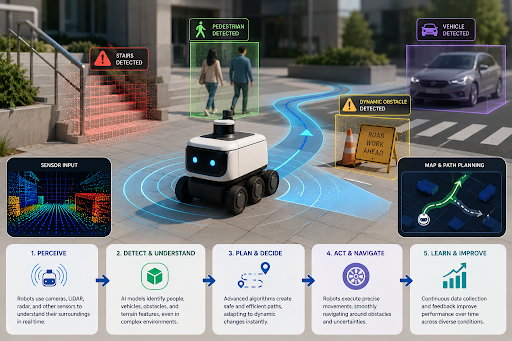
As robotics technology becomes more advanced, businesses across industries are deploying autonomous robots to improve operational efficiency, automate repetitive tasks, and support large-scale operations. From warehouses and hospitals to commercial facilities and security environments, robotics is becoming a major part of modern business infrastructure. However, while robots perform well in controlled environments, real-world navigation remains one of the biggest challenges in robotics deployment. Dynamic surroundings, unpredictable obstacles, and human interaction often create situations that autonomous systems cannot fully manage on their own. This is why many organizations are integrating robot teleoperation and robot monitoring services to support robotic navigation with real-time human oversight and operational assistance. Why Navigation Is One of the Biggest Challenges in Robotics Robots rely on sensors, mapping systems, cameras, artificial intelligence, and machine learning algorithms to navigate environments autonomously. While these technologies continue improving, real-world conditions remain highly unpredictable. Robotic systems may encounter: Crowded walkways and workspaces Unexpected obstacles or moving objects Changing layouts and environments Poor lighting or weather conditions Human behavior that is difficult to predict Even advanced robotics systems can struggle when situations fall outside their programmed scenarios or training data. Common Real-World Navigation Problems As robotics deployments expand, companies face several navigation-related operational challenges. 1. Dynamic Environments Warehouses, hospitals, retail spaces, and commercial buildings constantly change throughout the day. Inventory movement, customer traffic, and operational activity can disrupt robotic pathways. 2. Sensor Limitations Robots depend heavily on sensors and cameras to interpret their surroundings. Dust, lighting changes, reflective surfaces, or environmental interference can reduce accuracy. 3. Edge Cases & Unexpected Situations Robots may struggle with situations they were not specifically trained to handle, such as: Sudden obstacles Emergencies Human crowding Blocked pathways Unusual object placements 4. Multi-Robot Coordination Large robotic fleets operating simultaneously can create navigation conflicts, traffic bottlenecks, and operational slowdowns. Without proper oversight, these issues can affect efficiency, safety, and operational reliability. How Robot Monitoring Helps Solve Navigation Challenges To improve reliability, many robotics companies now use remote monitoring and teleoperation systems that allow trained operators to supervise robots in real time. Using: Live camera feeds Sensor and GPS data Operational dashboards Remote control interfaces Real-time alerts and communication systems Operators can quickly intervene when robots encounter navigation difficulties. This human-in-the-loop approach allows businesses to: Resolve navigation issues faster Improve operational safety Reduce downtime and workflow interruptions Support robots in unpredictable environments Maintain more reliable autonomous operations Instead of relying entirely on automation, organizations combine machine efficiency with human expertise to create more adaptable robotic systems. Businesses exploring scalable robotics support solutions often also rely on services available through the OBI Services homepage. Benefits of Human-Supported Robot Navigation Combining robotics with remote operational support provides several advantages for businesses deploying autonomous systems. Improved Operational Reliability Human operators help robots adapt to real-world environmental changes more effectively. Faster Problem Resolution Navigation issues can be resolved immediately before they disrupt workflows. Better Safety Management Remote oversight helps reduce risks in crowded or high-traffic environments. Reduced Downtime Monitoring teams can quickly respond to technical or environmental interruptions. Scalable Fleet Operations Centralized monitoring allows businesses to manage larger robotic deployments across multiple locations efficiently. Industries Facing Navigation Challenges Many industries deploying autonomous robotics benefit from remote monitoring and teleoperation support. Warehousing & Logistics Warehouse robots navigate constantly changing inventory layouts and high-traffic environments. Healthcare Facilities Hospital robots must safely move through crowded hallways and sensitive medical environments. Security & Surveillance Patrol robots monitor large facilities while adapting to unpredictable human activity. Hospitality & Retail Customer-facing robots operate in dynamic commercial spaces where navigation accuracy directly affects customer experience. In each industry, combining automation with human oversight improves robotic reliability and operational performance. For more insights into robotics, automation, and operational support strategies, businesses can explore this related industry blog. The Future of Autonomous Navigation The future of robotics is not about fully eliminating human involvement—it is about creating smarter collaboration between autonomous systems and human expertise. As robotics technology continues evolving, businesses that integrate human-in-the-loop monitoring systems will be better positioned to: Improve robotic performance Reduce navigation-related risks Scale autonomous operations safely Adapt to unpredictable environments Maintain higher operational efficiency Real-world navigation will remain one of the most important challenges in robotics, and organizations that combine automation with real-time human support will lead the next generation of scalable robotic operations.

Medical Billing Services
Health

Stop Claim Rejections Using Expert Medical Billing Services in California

Despite numerous advancements in the industry, medical claim rejections remain one of the most significant issues that plague healthcare providers in California. Regardless of whether they are part of private practices, specialized clinics, hospitals, or even urgent care facilities, rejections and denials can result in delays, financial losses, and overall poor performance. Considering how the healthcare industry changes so often and becomes increasingly regulated, providers should make sure that their billing processes do not have any issues – which is precisely where professional medical billing services come into play. Medical billers are skilled professionals who specialize in ensuring that claim denials are minimized, and revenue cycle management is optimized. Thanks to their experience and knowledge, they make sure that claims will be processed correctly. Understanding Medical Claim Rejections Claim rejection happens when an insurance company does not process the claim due to errors or missing information. It differs from claim denial since claim rejections are not put through in the insurer’s system as there are some problems that require validation before putting a claim through the process. Examples of reasons for claims rejections include errors in patient identification information, invalid codes, duplicated claims, missing modifiers, incorrect insurance information, and incomplete documentation. Sometimes even small mistakes will affect the reimbursement process and increase administrative work. Employees have to devote their time to solving these issues, sending documents again, and contacting insurance companies to solve their claims. These processes may cause a significant impact on the economic stability of any healthcare facility. In California, the healthcare regulations are very thorough and the number of insurance networks is large. Therefore, claim rejections become more common for healthcare organizations since providers need to meet federal and state criteria. The Financial Impact of Claim Rejections The rejection of claims leads to major financial concerns for health care facilities. Each rejected claim means that there will be no payment made at the required time. In case these claims are not amended and filed again, the provider will miss out on his payment due to not complying with the filing date. Increased costs occur as a result of higher administrative expenses, meaning the staff have to spend more time on the identification of any errors, amending claims, and filing appeal procedures. Billing errors lead to damaged relations with the insurance company and lower patients’ satisfaction with regard to payments. This issue has especially high significance for small healthcare providers in California as it puts a strain on their budgets. Health care facilities usually experience tight financial situation and the late reimbursements cause further budgeting challenges. Why Medical Billing Errors Happen Billing for hospitals is an intricate process that needs precision and industry updates. Some mistakes are caused by excessive workloads of the billing department or inadequate training about emerging industry codes. Incorrect medical coding is one of the most common reasons for claim rejections. The right coding based on the ICD-10, CPT, and HCPCS codes must be provided to explain diagnoses, operations, and treatment procedures. Coding policies are constantly being updated, and even skilled professionals can make errors if they lack constant training. Claims can also be rejected due to eligibility issues. Outdated patient insurance information might prevent claims from being accepted in advance. Moreover, discrepancies between actual services and medical records will make the claims ineligible. The problem is aggravated by the payer requirements of California providers, which vary depending on each insurance company. Payers have specific billing instructions, authorization regulations, and claim submission deadlines. How Expert Medical Billing Services Help Professional medical billing services in California will help avoid most mistakes during billing processes to ensure high rates of claim submission and approvals. Professional billing companies in California use highly qualified billing professionals, who have enough skills to handle various aspects related to proper claim submission and approval processes. The first advantage of hiring professional billing companies is proper claim processing. Medical billing professionals will analyze all aspects of the patient and insurance coverage before submitting claims to insurance companies. Such an approach minimizes the chances of errors, which result in rejections. Furthermore, billing experts will always be aware of changes in regulatory practices in California. Proper knowledge of the billing professionals will enable them to create and submit clean claims. Moreover, billing professionals make use of special software tools for checking the eligibility of patients before submitting claims to insurance companies. Another benefit is the quick submission of claims. The billing process becomes very easy because companies have specialized software tools. They enable billing professionals to submit clean claims without delays. Improved Coding Accuracy and Compliance Coding accuracy is critical to minimizing claim denials. In professional billing services, the company hires skilled coders who are capable of coding correctly for medical procedures and diagnoses. Coders possess knowledge of advanced coding systems to code claims for services provided according to provider documentation. Coding accurately serves the dual purpose of minimizing claim denials and helping healthcare facilities avoid any compliance problems. Inaccurate coding may result in underpayment or overpayment and can even lead to an investigation related to fraud and abuse in the billing system. Medical Collection Services is a crucial task for billing companies in California due to the presence of stringent regulations regarding the healthcare sector. Skilled billers manage compliance effectively by ensuring that all procedures and processes comply with HIPAA laws, payor guidelines, and industry standards. Faster Insurance Verification and Eligibility Checks It is also necessary to consider that insurance verification plays a major role in avoiding claim rejections. Specialists involved in billing usually conduct insurance verification prior to the procedure and check the patient’s eligibility for treatment according to their policy. Due to verification, the problem of claim rejection may be avoided because of possible insurance plan deactivation or other reasons associated with the patients’ eligibility and financial condition. In addition, patients become aware of the fact whether they will pay any amounts for treatment. Finally, due to the peculiarities of the healthcare market in California, insurance verification is especially crucial

offsite airport parking benefits
General

What Are the Benefits of Offsite Airport Parking

Offsite airport parking gives you a cheaper, less stressful way to leave your car before a flight. Instead of parking inside the airport grounds, you park at a nearby facility and take a shuttle to the terminal from there. Meanwhile, on-airport car parking can cost significantly more per day, and that amount adds up on a long trip. That’s why, for many travellers, going off-site with providers like ParknFly is the better option. In this article, we’ll cover the main benefits of offsite parking, including shuttle services, security, car cleaning add-ons, and booking tips. We’ll also talk about how it works across different Australian airports and how booking ahead saves you more than just time. Let’s find out if off-site airport parking is the right call for your next trip. Offsite Airport Parking: What You Get for Your Money The cost of airport parking can sneak up on you, but offsite lots run at a noticeably lower daily rate than anything you’d pay on airport grounds. Plus, you’ll get shuttle transfers, a managed facility, and a far less stressful drop-off experience included. Here’s how the entire service breaks down. What Sets It Apart From On-Airport Car Parking Offsite lots sit closer to main roads, so drop-off is faster and far less chaotic than roaming around at a busy terminal car park. Unlike on-airport options, off-site providers include shuttle transfers as part of the service, which means you’ll never have to haul luggage long distances on foot. Not to mention, your car will be parked in a dedicated, managed facility rather than a crowded public airport structure. That gives you more space, easier access when you return, and a lower risk of dents or unnecessary wear while you’re away. How Long-Term Parking Rates Compare Fair warning: just two weeks of on-airport parking can slowly wipe out your travel spending money. On the other hand, daily rates at off-site lots run noticeably cheaper, particularly for stays beyond three days. Booking ahead often locks in a better rate too, with some providers throwing in a promo code or early-bird discount for online reservations. Considering the benefits, a long trip overseas is where off-site parking provides the most savings. Is the Free Shuttle Service Really That Convenient? A free shuttle service is what makes off-site airport parking truly convenient as a travel option. From the moment you drop your car off at the parking facility, the shuttle handles everything else. This is how the free shuttle service helps you out. How Shuttle Buses Get You to the Terminal Most offsite shuttle buses run continuous loops between the car park and the airport terminal, so waiting around is rarely an issue. From there, the shuttle drops you right at the terminal entrance (no walking across car parks, and confusing airport roads to get lost). Some providers also let you track your shuttle service via app, so you know when it’s heading your way. By the time you arrive at the terminal, the stressful part of getting to the airport is already behind you. Luggage, Families, and the Details That Make It Easier From what we’ve seen, families travelling with young kids feel the difference of off-site parking the most. And it is not just families either, business trip travellers with tight schedules rely on this service just as much. Take a look at how things get easier for you: ● Luggage Assistance: Friendly staff at many offsite facilities help load and unload bags at both ends of the transfer, which saves you the trouble. ● Family-Friendly Transfers: If you have a pram and three bags, the shuttle service gives you a seated, direct run to the terminal. That way, you don’t have to manage multiple transfers or navigate crowded public transport. ● Around the Clock: Early morning or late night flights won’t be a problem, as most off-site shuttle buses keep running through the night for customers on any schedule. Once you’ve used an off-site shuttle service for the first time, going back to on-airport parking will feel like a step backwards. Your Car Parking Space, Security, and Add-Ons Explained Leaving your own vehicle in an unmanaged structure for a week or two is a different situation entirely. Fortunately, the level of secure parking an off-site facility provides is a notch higher than what most on-airport car parks offer. Here is what happens to your car while you are away. Where Your Vehicle is Kept While You’re Abroad Offsite parking facilities operate behind a secure perimeter, with gated entry and no public access, so the worry of someone wandering near your vehicle is largely off the table. Furthermore, security cameras and on-site staff will keep an eye on the facility around the clock. On top of that, customers with undercover bays get the added benefit of weather protection. Some providers also offer undercover parking spaces for longer stays. This helps protect your vehicle from weather-related wear if you are heading off on a long trip during the wetter months. That is the protection level you are paying for, and for most travellers, it is well worth it. Car Cleaning Services: The Optional Extra Worth Booking Regular travellers often say that the car cleaning add-on is one of the service options most people wish they had booked sooner. Beyond the secure parking, many off-site facilities offer car wash and car cleaning packages you can add on at the time of booking. With these add-ons, your car will be clean, fuelled, and ready at the door when you come back from your trip. You can just sign off on the add-on before you fly, and the facility will take care of it while your vehicle sits there anyway. Some providers even cover a flat tyre or flat battery at no extra charge (that is the kind of service that makes you want to book again). Now that you know what off-site parking includes, the next question is whether those same benefits apply at smaller airports around Australia. Does Offsite Airport Parking Work the Same

How SSOID Works
2, General

How SSOID Works: Step-by-Step Explanation

In today’s digital governance systems, one of the biggest challenges users face is managing multiple usernames and passwords for different services. To solve this problem, governments and organizations have introduced centralized login systems that simplify access and improve security. One such system is widely known through platforms like SSO ID, which allows users to access multiple government services using a single digital identity. Have you ever wondered how a single login can unlock dozens of services without repeatedly signing in? The answer lies in a carefully designed authentication system that connects identity, security, and service access in one place. Understanding the Concept of Single Sign-On Before diving into the process, it is important to understand what Single Sign-On actually means. It is a system where a user logs in once and gains access to multiple applications without needing to log in again for each service. Instead of creating separate accounts for every platform, users rely on one verified identity. This approach reduces password fatigue, improves security, and simplifies digital interaction. In government ecosystems, it is especially useful because citizens interact with multiple departments like taxation, education, health, and utilities. A unified system ensures smoother access and better efficiency. Step-by-Step Registration Process The journey begins with user registration, which is the foundation of the entire system. When a new user wants to create an account, they are required to provide basic personal details such as name, mobile number, email address, and sometimes identity verification documents. After entering the information, the system verifies the user through a one-time password (OTP) sent to their registered mobile number or email. This step ensures that only genuine users are allowed to proceed. Once verified, the user creates a secure password and completes the registration process. At this stage, a unique digital identity is generated. This identity acts as a master key for accessing all connected services in the ecosystem. Without this step, the entire login framework would not function effectively. Step-by-Step Login and Authentication Process Once registered, the login process becomes the gateway to all services. The user enters their username and password on the login page. The system then checks the credentials against the stored database. If the details match, the system does not immediately grant access to services. Instead, it generates a secure authentication session. This session acts like a temporary digital permission slip that confirms the user’s identity. During this process, encrypted tokens are created. These tokens are used to maintain session security and prevent unauthorized access. If the token is valid, the user is redirected to the dashboard where multiple services are available. This is where platforms like SSO ID become extremely useful, because they eliminate the need to log in repeatedly for every service request. How the System Works Behind the Scenes The real strength of the system lies in its backend architecture. When a user logs in, several processes occur simultaneously. First, the authentication server validates the credentials. Then, a secure token is generated and linked to the user’s session. This token is stored temporarily and shared across multiple connected services. Whenever the user tries to access a new service, the system checks the validity of the token instead of asking for login details again. This reduces processing time and improves efficiency. It also ensures that user data remains centralized, making it easier for systems to track activity and maintain records. The entire structure is designed to balance convenience and security. Without such a system, users would constantly need to manage multiple passwords, increasing the risk of weak or reused credentials. Services and Benefits for Users A centralized identity system provides access to a wide range of services from a single platform. Users can apply for certificates, pay bills, check application status, and access government portals without logging in separately for each task. One of the major advantages is time efficiency. Instead of remembering multiple passwords and usernames, users only need one set of credentials. This significantly reduces confusion and improves user experience. Another benefit is transparency. Since all activities are linked to a single identity, tracking and verification become easier for both users and administrators. Security and Privacy Features Security is a core element of the system. Multiple layers of protection are implemented to ensure data safety. These include encryption, session validation, OTP verification, and automatic logout features. Even if someone tries to access an account without permission, they cannot proceed without passing multiple verification stages. Additionally, session tokens expire after a certain period of inactivity, reducing the risk of misuse. User data is stored in encrypted form, making it difficult for unauthorized access. Regular system updates also help in fixing vulnerabilities and improving protection. Common Issues and System Handling Like any digital platform, users may sometimes face issues such as forgotten passwords, OTP delays, or login errors. However, the system is designed with recovery options. Users can reset their passwords using registered mobile numbers or emails. OTP-based verification ensures that only the rightful user regains access. In case of technical issues, support systems guide users through troubleshooting steps. These built-in recovery mechanisms ensure that access is not permanently lost and that users can continue using services smoothly. Conclusion Understanding how digital identity systems function helps users appreciate the technology behind everyday services. From registration to authentication, every step is designed to ensure security, convenience, and efficiency. The concept of a unified login system has transformed how people interact with digital platforms, especially in governance. By reducing complexity and improving access, it has made online services more user-friendly and reliable. In this entire ecosystem, the role of SSO ID becomes central, as it connects identity with multiple services in a secure and seamless way.

SSOID
2, General

Why SSOID is Important for Digital India Initiative

The vision of a fully digital nation has transformed how public services are designed and delivered. Over the past decade, India has moved steadily toward digitization, aiming to make governance faster, more transparent, and more accessible. But one critical challenge has always remained: how can millions of citizens access thousands of services without facing complexity, duplication, and confusion? This is where unified digital identity systems become essential. In the broader landscape of India, such systems are not just technical tools—they are foundational elements that support the entire structure of digital governance. They simplify interactions, reduce inefficiencies, and create a more connected public service environment. The Need for a Unified Digital Identity System Before digital transformation, accessing government services often meant dealing with separate portals, repeated verification processes, and multiple registrations. This created unnecessary barriers for citizens and increased workload for government departments. A unified identity system solves this problem by allowing users to access multiple services through a single authentication point. Instead of managing different credentials for each department, individuals can rely on one secure identity to navigate the entire ecosystem. This approach is not only convenient but also strategically important for scaling digital governance across a large and diverse population. At the center of this transformation is SSO ID, which acts as a bridge between citizens and government services, ensuring that access is simple, consistent, and secure. Improving Citizen Experience in Everyday Governance One of the most visible impacts of digital governance is how it changes the daily experience of citizens. Earlier, people had to visit offices physically, submit paperwork multiple times, and wait in long queues for basic services. Now, the experience is significantly more streamlined. Citizens can apply for services, track applications, and access documents from a single platform. This reduces both time and effort while improving overall satisfaction. More importantly, it empowers individuals by giving them control over their interactions with government systems. Instead of relying on intermediaries, users can directly manage their needs in a transparent environment. Have you ever thought about how much time is lost in repetitive administrative tasks? A unified system helps reclaim that time and redirect it toward more meaningful activities. Strengthening Government Efficiency and Coordination Digital India is not only about citizen convenience; it is also about improving how government institutions function internally. Without integration, departments often operate in isolation, leading to delays, duplication of work, and inefficiencies. A unified identity framework connects these departments, allowing them to share verified data securely and efficiently. This reduces redundancy and improves coordination between different agencies. As a result, application processing becomes faster, decision-making becomes more accurate, and overall governance becomes more responsive. Employees spend less time managing data and more time focusing on service delivery. The presence of SSO ID ensures that this coordination happens smoothly without creating additional complexity for users or administrators. Enhancing Security and Building Digital Trust Security is one of the most important pillars of any digital system. When personal data is involved, users need assurance that their information is protected. Unified identity systems are designed with strong authentication mechanisms, encryption technologies, and controlled access systems to ensure data safety. This reduces the risk of unauthorized access and improves overall system reliability. Trust plays a major role in digital adoption. If users do not feel secure, they are less likely to engage with online services. A secure system encourages participation and builds long-term confidence in digital governance. Would people fully embrace online services without trust in the system? Probably not, which is why security remains a top priority. Driving Inclusion and Bridging the Digital Divide One of the core goals of Digital India is inclusivity. However, accessibility challenges still exist, especially in rural and semi-urban areas where digital literacy may be limited. A simplified identity system helps bridge this gap by reducing complexity and making services easier to access. Users do not need advanced technical knowledge to navigate government platforms. Instead, they can rely on a straightforward login system to access essential services. This inclusion ensures that digital transformation is not limited to urban populations but reaches every segment of society. It helps create equal opportunities for all citizens, regardless of location or technical skill level. Supporting Large-Scale Digital Transformation India’s population size makes governance a complex challenge. Any digital system must be capable of handling millions of users while maintaining performance and reliability. Unified identity systems are built to scale efficiently. They allow new services to be added without disrupting existing workflows. This flexibility is essential for a rapidly evolving digital ecosystem. The presence of SSO ID ensures that as more services become digital, users do not face increased complexity. Instead, everything remains accessible through a consistent and unified structure. Transparency and Accountability in Governance Transparency is one of the most powerful outcomes of digital governance. When processes are visible, users can track progress and understand how decisions are made. This reduces uncertainty and eliminates the need for intermediaries. Citizens can directly interact with systems and receive updates in real time. For government departments, transparency also improves accountability. When processes are traceable, it becomes easier to identify inefficiencies and improve performance. Isn’t transparency the foundation of trust in public systems? Digital tools make this transparency more achievable than ever before. Challenges in Implementation and Adoption While the benefits are significant, implementing a nationwide digital identity system comes with challenges. One of the biggest issues is awareness. Many users may not fully understand how to use digital platforms effectively. Another challenge is maintaining system performance as usage grows. With millions of users accessing services simultaneously, ensuring speed and reliability is essential. Continuous improvements, training programs, and user support systems are necessary to address these challenges. Over time, adoption increases as users become more familiar with digital tools. The Future of Digital Governance in India The future of governance is increasingly digital, interconnected, and data-driven. As technology continues to evolve, more services will be integrated into unified platforms. This will further reduce administrative complexity and enhance user experience.

Which Rhinoplasty Technique Delivers Better Results?
Health

Which Rhinoplasty Technique Delivers Better Results?

Rhinoplasty, commonly known as a nose job, is a popular procedure in the realm of cosmetic surgery. It offers individuals the opportunity to reshape their nose for aesthetic or functional reasons. With various techniques available, potential patients are often faced with the challenge of choosing the best approach. This article explores the different rhinoplasty techniques, their outcomes, and considerations to help you make an informed decision. Overview of Rhinoplasty Techniques Rhinoplasty can be broadly categorized into three main techniques: open rhinoplasty / closed rhinoplasty, and non-surgical rhinoplasty. Each technique has its own unique approach, benefits, and considerations. Open Rhinoplasty Open rhinoplasty involves making a small incision on the columella, the tissue between the nostrils. This technique provides the surgeon with a clear view of the nasal structures, allowing for precise adjustments. It is particularly beneficial for complex reshaping or when substantial changes are required. Closed Rhinoplasty Closed rhinoplasty, also known as endonasal rhinoplasty, involves incisions made within the nostrils. This technique leaves no visible scars and often results in a shorter recovery time. It is ideal for patients requiring minor adjustments or refinement. Non-Surgical Rhinoplasty Non-surgical rhinoplasty is a minimally invasive option that involves the use of dermal fillers to alter the shape of the nose. While it offers immediate results and no downtime, the effects are temporary and primarily suited for individuals seeking minor changes. Comparative Analysis Aesthetic Outcomes The aesthetic outcomes of rhinoplasty depend significantly on the technique used and the individual’s unique facial structure. Open rhinoplasty provides greater access and control, often leading to more dramatic changes. In contrast, closed rhinoplasty may be preferable for subtle refinements with less extensive alterations. Recovery Time Recovery time varies by technique. Open rhinoplasty typically requires a longer healing period due to its invasive nature, with swelling subsiding over several weeks. Closed rhinoplasty often boasts a shorter recovery, with many patients returning to normal activities within two weeks. Non-surgical rhinoplasty offers the quickest recovery, with most patients resuming their daily routine immediately. Risks and Complications Each technique carries its own risks and potential complications. Open rhinoplasty may result in more noticeable swelling and scarring, whereas closed rhinoplasty poses a risk of limited visibility for the surgeon, which may impact precision. Non-surgical rhinoplasty, while less invasive, can lead to complications such as filler migration if not performed by a skilled practitioner. Patient Considerations Personal Goals Your desired outcomes play a crucial role in selecting the appropriate technique. If you seek substantial reshaping, open rhinoplasty may be the best option. For minor adjustments, closed or non-surgical rhinoplasty might suffice. Surgeon Selection Choosing the right surgeon is paramount. Look for a board-certified plastic surgeon with extensive experience in rhinoplasty techniques. A skilled surgeon will tailor the approach to your facial structure and goals, enhancing the chances of a successful outcome. Cost and Insurance The cost of rhinoplasty varies significantly based on the technique and surgeon’s expertise. While open rhinoplasty tends to be more expensive, it often offers the most comprehensive results. Insurance coverage is typically limited to cases involving functional improvements, such as correcting breathing issues. Expert Insights and Innovations Advancements in rhinoplasty techniques continue to evolve, with new tools and technologies improving precision and outcomes. Surgeons are increasingly adopting 3D imaging to plan procedures, offering patients a visual preview of potential results. Additionally, expert interviews highlight the importance of customizing techniques to accommodate ethnic and individual facial differences. Conclusion and Recommendations Choosing the right rhinoplasty technique depends on your specific goals, facial structure, and recovery preferences. Open rhinoplasty is ideal for significant reshaping, while closed rhinoplasty suits those seeking minor changes. Non-surgical options offer a temporary solution with minimal downtime. Consult with a qualified surgeon to determine the best approach for your needs. Frequently Asked Questions What is the difference between open and closed rhinoplasty? Open rhinoplasty involves an incision on the columella for better visibility, while closed rhinoplasty uses internal incisions, resulting in no visible scars. How long does it take to recover from rhinoplasty? Recovery times vary: open rhinoplasty may take several weeks, closed rhinoplasty about two weeks, and non-surgical rhinoplasty offers immediate results. Are non-surgical rhinoplasty results permanent? No, non-surgical rhinoplasty results are temporary, typically lasting several months before requiring maintenance. What rhinoplasty technique is best for specific nose shapes? The best technique depends on individual goals and facial structure. A consultation with a skilled surgeon will provide personalized recommendations. How do different techniques affect scarring? Open rhinoplasty may leave a small scar on the columella, while closed rhinoplasty leaves no visible scars. Non-surgical options do not involve incisions. If you are considering rhinoplasty, consult with a certified plastic surgeon to explore your options and ensure the best possible outcome. A personalized approach will help you achieve the desired results while minimizing risks and recovery time.

Optimizing the Suction Path: How to Unclog a Pool Vacuum Robot
General

Optimizing the Suction Path: How to Unclog a Pool Vacuum Robot

Homeowners often watch their automated extraction equipment drive directly over a localized pile of dirt, only to see the debris scatter into a cloudy mess or remain entirely untouched on the floor. The immediate, frustrating assumption is that the internal motor is failing or the battery is rapidly dying. However, in the vast majority of cases, the electrical and mechanical hardware is perfectly fine. The machine is simply suffering from hydraulic asphyxiation. A pool vacuum robot relies entirely on a continuous, high-velocity flow of water to create the negative pressure necessary to lift heavy debris off the slick plaster. When this suction path is compromised by a physical physical blockage, the machine instantly loses its ability to extract dirt, degrading from a high-tech cleaner into an expensive, slow-moving submarine. Understanding the linear anatomy of this suction path and knowing exactly where to look for hidden clogs is the definitive key to restoring your equipment to peak performance. The Linear Anatomy of the Water Pathway To effectively troubleshoot a sudden loss of suction, you must first visualize how water physically travels through the chassis of the machine. The extraction process is entirely linear and relies on the principles of fluid dynamics. The journey begins at the bottom of the unit, where wide intake ports sit just millimeters above the floor of your pool. Inside the machine, an impeller—a specialized, fan-like blade mounted at the top of the chassis—spins at thousands of revolutions per minute. This rapid spinning aggressively pulls water up through the bottom intake ports, forces it directly through the internal filter basket, and shoots it out the top exhaust vent. Because water is an incompressible fluid, the volume of water exiting the top exhaust must perfectly equal the volume of water entering the bottom intake. If a physical object restricts the flow at any point along this linear path, the impeller is forced to spin in a starved environment. It pulls a vacuum against the physical blockage instead of pulling water off the pool floor. The result is a drastic and immediate drop in suction power at the ground level. The machine will stubbornly continue to drive its programmed route, its wheels turning and its scrubbing brushes spinning, but it will lack the hydraulic lift required to pull heavy sand, pebbles, or wet leaves up into the internal containment chamber. Identifying the Primary Choke Points Clogs rarely happen squarely in the center of the large filter basket. They almost exclusively occur at the mechanical bottlenecks, where the physical space narrows, or the direction of the water flow changes abruptly. When diagnosing a machine that is suddenly leaving trails of debris behind, you must systematically check the three primary internal choke points. Internal Choke Point Common Environmental Culprits Mechanical Symptoms of a Blockage Bottom Intake Flaps Rigid pinecones, sweetgum balls, thick wooden twigs, or sunken children’s dive toys. The machine drives over debris but pushes it around instead of swallowing it. The plastic bottom flaps are visibly propped open or jammed shut. Filter Mesh Panels Fine dead algae, excessive spring pollen, pet hair, or heavily saturated clay mud. Water drains out of the machine incredibly slowly when pulled onto the dry deck. The machine leaves visible tire tracks in the fine dust on the pool floor. Top Exhaust Impeller Long human hair, palm tree fibers, or tough, flexible pine needles. The machine makes a loud grinding, rattling, or high-pitched whining noise. The water jetting from the top exhaust feels remarkably weak, uneven, or non-existent.   The Step-by-Step Unclogging Protocol When you correctly identify a drop in suction power, resist the urge to vigorously shake the machine or hit the side of the chassis to dislodge the trapped dirt. Blockages must be cleared methodically to prevent snapping delicate plastic hinges or tearing the microscopic weave of the synthetic filter mesh. Secure and Clear the Intake Flaps: Pull the machine out of the water and flip the unit upside down on a soft towel to protect the glossy top casing. Inspect the rectangular intake ports near the spinning brushes. Most units feature a one-way rubber or plastic flapper valve designed to let debris in but prevent it from falling back out when the motor stops. Carefully press these flaps inward with your finger. If a rigid twig or an acorn is wedged horizontally across the opening, do not yank it violently. Gently rotate the object to align with the rectangular port and pull it straight out to avoid permanently tearing the flexible rubber hinges. Deep Clean the Blinded Filter Pores: Simply dumping the leaves out of the basket is entirely insufficient. When fine silt or algae paste blinds the filter, the microscopic pores physically seal shut. Remove the filter assembly and use a garden hose with an adjustable nozzle. Set the nozzle to a concentrated, flat spray. Blast the filter mesh from the outside pointing inward. You must hold the panel up to the sun and visually confirm that light passes cleanly through the synthetic mesh. If the mesh remains opaque, soak it in a mild vinegar solution for fifteen minutes to dissolve the hardened calcium or organic grease that is restricting the water flow. Perform an Impeller Clearance Check: The absolute most dangerous clog occurs at the very top of the suction path. The impeller blades are the beating heart of the vacuum system. Remove the top exhaust cover, which usually requires a standard Phillips-head screwdriver or a simple twist-lock mechanism. Shine a bright flashlight directly down the motor shaft. Long hair and fibrous plant material act exactly like a wet rope, wrapping tightly around the base of the metal motor shaft, remaining completely hidden just beneath the plastic fan blades. Use a pair of long needle-nose pliers to carefully pinch and extract this fibrous ring. Never use a utility knife to cut the hair blind, as you risk severing the crucial waterproof rubber seal at the base of the electrical motor. Preventative Tactics for Uninterrupted Flow The most effective

hosted event pblgamevent
General

Hosted Event PBLGamevent: A Practical Guide to Planning and Running It Right

What makes a hosted event PBLGamevent worth attending? A hosted event PBLGamevent is not just another online or offline gathering—it’s a focused, purpose-driven experience built around participation, competition, and engagement. Whether it’s a gaming tournament, a community challenge, or a themed event, the difference lies in how well it’s organized and how smoothly it runs. People don’t show up just for the idea. They stay for the experience. If the event feels chaotic, confusing, or slow, even the best concept falls flat. On the other hand, a well-hosted PBLGamevent creates excitement, builds community, and leaves participants wanting more. Understanding the core of a PBLGamevent It’s not just about gaming At its core, a PBLGamevent blends structured activities with interactive participation. “PBL” often hints at problem-based or play-based learning, but in events, it usually means creating challenges that require thinking, strategy, and teamwork. That means your event should include: • Clear goals or challenges • Interactive participation • Fair competition or collaboration • Real-time engagement A simple “play and win” setup isn’t enough. The structure matters. Planning your hosted event the smart way Start with a clear purpose Before anything else, define what you want the event to achieve. Ask yourself: • Is this for fun, learning, or competition? • Who is the target audience? • What kind of experience should participants walk away with? Without clear intent, the event becomes scattered. Choose the right format Your format should match your audience and resources. Some common options: • Online tournaments (easy to scale, low cost) • Live hosted sessions (more engaging, requires planning) • Hybrid events (mix of online and physical interaction) Don’t overcomplicate things. A simple, well-run format beats a complex, poorly managed one. Setting up the event structure Create a clear flow Participants should never feel lost. A strong event has a predictable flow: Registration Instructions or briefing Gameplay or activity rounds Results and feedback Each step should be easy to follow. Make rules simple and visible Confusion kills engagement. Keep rules: • Short • Easy to understand • Accessible before and during the event If participants keep asking basic questions, your rules aren’t clear enough. Tools and setup that actually help Use reliable platforms Your tools should support the event—not complicate it. Depending on your format, you might need: • A communication platform (like chat or voice) • A scoring or tracking system • A streaming or hosting tool Test everything before the event starts. Technical issues are one of the biggest reasons events fail. Prepare for small problems Even well-planned events face issues. Be ready for: • Late participants • Connection problems • Rule disputes Having a quick response plan keeps things under control. Keeping participants engaged Interaction is everything People lose interest quickly if they feel disconnected. To keep engagement high: • Give live updates • Announce progress or rankings • Encourage friendly competition Even small interactions—like calling out top performers—make a difference. Reward participation, not just winners If only winners feel valued, most participants lose motivation. Consider: • Small rewards for participation • Recognition for effort or creativity • Leaderboards that highlight more than just first place This builds a stronger community feeling. Hosting the event smoothly Your role as a host matters A good host does more than manage—they guide the experience. Focus on: • Clear communication • Staying calm under pressure • Keeping the energy positive If the host feels unsure, participants notice immediately. Timing is critical Respect people’s time. Avoid: • Long delays • Unclear waiting periods • Overextended sessions A slightly shorter, well-paced event is always better than a long, dragging one. After the event: what most people ignore Collect feedback This is where real improvement happens. Ask participants: • What did they enjoy? • What felt confusing? • What should be improved? Keep it simple, but take it seriously. Build on the momentum A successful hosted event PBLGamevent shouldn’t end abruptly. You can: • Share results publicly • Post highlights or moments • Announce future events This keeps your audience connected and ready for the next one. Common mistakes to avoid Even experienced organizers fall into these traps: • Overcomplicating the event structure • Ignoring participant experience • Poor communication during the event • Lack of preparation for technical issues • Focusing only on winners Avoiding these alone can put you ahead of most events. Final thoughts A hosted event PBLGamevent succeeds when it feels smooth, engaging, and meaningful from start to finish. It’s not about having the biggest setup or the most advanced tools—it’s about clarity, structure, and how people experience the event. If participants understand what to do, feel involved throughout, and leave with a positive impression, you’ve done it right. Start simple, stay organized, and focus on the people attending. That’s what turns a basic event into something people actually remember.

Scroll to Top