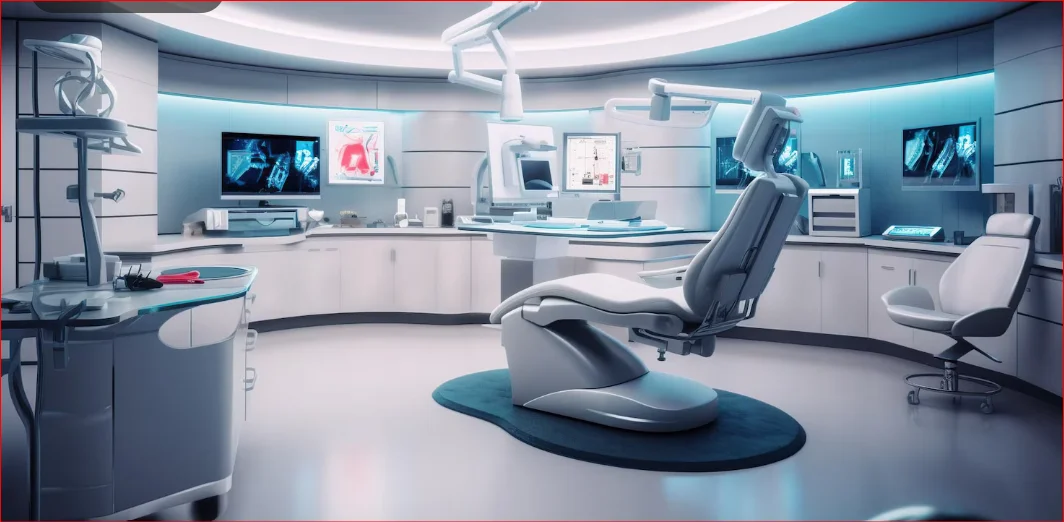
Dental care is entering a phase where clinical judgment is no longer working alone. Imaging systems, patient histories, and diagnostic signals are now being interpreted alongside advanced machine learning models. In this evolving environment, nerovet ai dentistry is emerging as a term associated with intelligent diagnostic support, workflow automation, and enhanced decision-making inside modern dental clinics.
What makes this shift important is not just technology adoption, but the way it is quietly changing how dentists review scans, communicate findings, and plan treatments. Instead of replacing clinical expertise, AI-supported systems are reinforcing it with structured insights that reduce uncertainty in daily practice.
Across clinics, dental professionals are increasingly dealing with higher patient volumes, complex imaging data, and rising expectations for faster results. This is where AI-assisted dentistry platforms are becoming part of the operational backbone rather than experimental tools.
A noticeable shift in how dental decisions are being supported
The dental field has always relied heavily on visual inspection, X-rays, and practitioner experience. However, modern imaging tools generate more data than a human eye can efficiently process in a short consultation window.
In this setting, nerovet ai dentistry represents a broader category of AI-driven support systems designed to assist with interpretation rather than replace decision-making.
Common reasons for adoption include:
- Increasing number of digital radiographs per patient
- Demand for faster diagnosis during short appointments
- Need for consistent interpretation across different clinicians
- Pressure to reduce missed early-stage dental issues
- Rising expectations for transparency in treatment planning
Instead of reviewing every image manually from scratch, dental professionals are starting to use AI-generated highlights as a second layer of review. This creates a more structured clinical workflow where human expertise and machine assistance complement each other.
See also 5 Reasons Why Progress Notes for Mental Health Therapy Are Critical for Compliance
How AI-assisted dental systems are reshaping daily clinical routines
In real-world dental environments, time is one of the most constrained resources. A typical clinic manages patient flow, imaging interpretation, consultation, and documentation all within tight schedules.
Systems associated with nerovet ai dentistry are being used to streamline repetitive and time-consuming tasks that do not necessarily require full human attention at every step.
These include:
- Preliminary scan evaluation for cavities and decay indicators
- Highlighting potential periodontal issues on radiographs
- Assisting in orthodontic measurement analysis
- Flagging areas that may require further clinical inspection
- Supporting documentation with structured diagnostic notes
The key value lies in reducing cognitive load. Instead of spending several minutes scanning each region of an image, practitioners can begin with AI-highlighted areas and then apply clinical judgment more efficiently.
This shift is especially noticeable in high-volume dental practices where consistency and speed are critical.
Imaging interpretation becoming more structured and layered
One of the most significant impacts of nerovet ai dentistry is how imaging interpretation is evolving from a purely visual task into a layered analytical process.
Traditionally, dentists interpret X-rays by identifying abnormalities based on experience and training. While highly effective, this method can vary slightly between practitioners depending on fatigue, workload, or case complexity.
AI-assisted interpretation introduces a second analytical layer:
- First layer: machine-generated pattern recognition
- Second layer: clinician validation and contextual judgment
This layered approach helps in reducing oversight risk and improving detection consistency.
In practical use, AI tools often highlight:
- Early enamel demineralization patterns
- Hidden interproximal caries indicators
- Bone density variations in periodontal assessments
- Root canal anomalies requiring closer review
- Alignment irregularities in orthodontic scans
Instead of replacing diagnostic authority, these systems act as a structured filter that brings attention to subtle signals that may otherwise be overlooked in busy environments.
Communication between dentists and patients is becoming clearer
One of the less discussed but highly impactful changes brought by nerovet ai dentistry is improved communication during patient consultations.
Explaining dental conditions using only X-rays or verbal descriptions can sometimes be difficult for patients to understand. AI-assisted visual overlays and structured reports help bridge this gap.
In modern dental consultations, AI-supported visuals can help:
- Show highlighted problem areas directly on scans
- Provide simplified visual breakdowns of conditions
- Support treatment justification with clearer evidence
- Reduce misunderstandings about diagnosis accuracy
- Improve patient trust in recommended procedures
When patients can visually see what the dentist is referring to, acceptance of treatment plans becomes more informed and less uncertain.
This is particularly valuable in procedures involving orthodontics, implants, and restorative dentistry, where decisions often involve long-term planning and financial consideration.
Efficiency gains inside busy dental practices
Beyond clinical interpretation, nerovet ai dentistry is increasingly linked to operational improvements within dental clinics.
Efficiency is not only about faster diagnosis but also about smoother workflow coordination across staff, equipment, and patient scheduling.
AI-supported systems contribute in several ways:
- Reducing time spent on manual image sorting
- Supporting faster case documentation
- Assisting in standardized reporting formats
- Helping prioritize urgent cases in queues
- Reducing repetitive administrative workload
When administrative tasks are reduced, clinicians can focus more on patient interaction and treatment quality.
This becomes especially important in multi-chair dental clinics where simultaneous patient management requires structured coordination.
A typical efficiency improvement cycle looks like this:
- Patient scan is captured digitally
- AI system pre-analyzes imaging data
- Key findings are highlighted automatically
- Dentist reviews focused areas instead of entire image
- Report is generated with structured notes
This cycle reduces unnecessary delays and helps maintain consistent patient flow.
Data handling, safety expectations, and clinical responsibility
As AI becomes more involved in healthcare environments, concerns around data handling and clinical responsibility naturally increase.
In the context of nerovet ai dentistry, data security and responsible usage are central to adoption.
Key expectations from modern AI dental systems include:
- Secure handling of patient imaging data
- Compliance with healthcare privacy standards
- Transparent decision-support logic where possible
- Non-reliance on AI as a final diagnostic authority
- Audit-friendly reporting for clinical records
Importantly, AI in dentistry is positioned as a support system, not an autonomous decision-maker. Final diagnosis always remains under professional clinical responsibility.
Dental professionals are expected to interpret AI output critically rather than accept it blindly. This ensures that patient safety and ethical standards remain intact.
Competitive positioning in modern dental care environments
Dental clinics adopting AI-assisted workflows are increasingly gaining a competitive edge in terms of service quality and patient experience.
The presence of systems aligned with nerovet ai dentistry is becoming a differentiator in several ways:
- Faster patient turnaround times
- More consistent diagnostic reporting
- Improved patient trust through visual clarity
- Reduced chair time per case
- Better handling of complex cases
In urban and high-demand areas, patients are becoming more aware of technology-enabled healthcare experiences. Clinics that integrate advanced diagnostic support tools often appear more modern, structured, and reliable.
This does not mean traditional clinics are becoming obsolete, but rather that expectations are shifting toward technology-enhanced care delivery.
Emerging direction of AI integration in dentistry
The evolution of nerovet ai dentistry is still in progress, and future developments are expected to go beyond simple image analysis.
Current trends suggest movement toward:
- Predictive dental risk assessment models
- Real-time chairside diagnostic suggestions
- Integration with electronic health record systems
- Personalized treatment planning recommendations
- AI-assisted preventive care monitoring
These developments indicate a shift from reactive dentistry to more preventive and predictive care models.
Instead of identifying problems after they appear, future systems may help identify risk patterns earlier, allowing dentists to intervene proactively.
This direction is already influencing how dental software developers design next-generation clinical tools.
Considerations before integrating AI into a dental practice
While adoption is growing, implementation requires thoughtful planning rather than rushed integration.
Dental clinics considering nerovet ai dentistry solutions often evaluate several practical factors:
- Compatibility with existing imaging equipment
- Training requirements for staff members
- Integration with current practice management systems
- Cost versus efficiency benefit analysis
- Reliability across different case types
It is also important to ensure that staff are comfortable interpreting AI outputs within clinical context. Without proper understanding, AI suggestions may be underused or misinterpreted.
Successful adoption usually depends on gradual integration rather than immediate full dependency.
A balanced approach often includes:
- Starting with diagnostic support only
- Training staff on interpretation workflows
- Reviewing AI accuracy alongside clinical results
- Expanding usage after validation period
Where dental practice transformation is heading next
The influence of nerovet ai dentistry is not limited to technology upgrades; it is reshaping expectations around precision, communication, and workflow efficiency.
Dentistry is becoming more data-informed, where every scan, record, and observation contributes to a structured digital ecosystem. Within this ecosystem, AI serves as a continuous assistant that helps reduce uncertainty and improve clarity.
What remains constant is the role of the dentist as the final authority. What is changing is the level of support available during every step of the diagnostic journey.
As more clinics adopt these systems, the standard of care is gradually shifting toward faster interpretation, clearer communication, and more consistent outcomes.
The real transformation is not just in tools, but in how dental professionals interact with information itself—turning complex imaging data into more actionable, reliable clinical decisions.