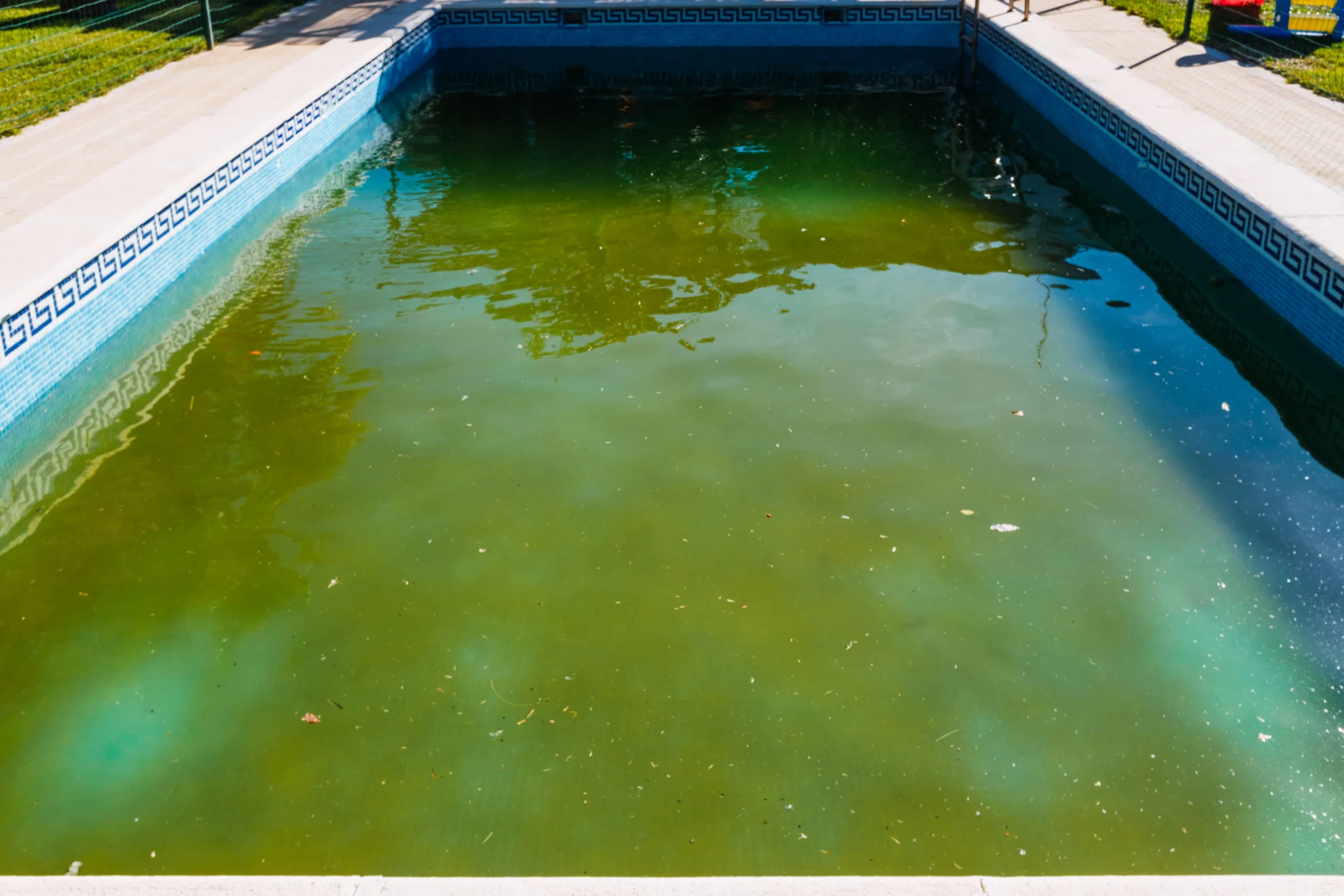
The term swimming pool specialist covers much more than someone who removes leaves and cleans a pool once a week.
A pool with cloudy water may need attention to chemistry, filtration or circulation. Weak return flow could involve a blocked basket, dirty filter, pump fault or plumbing restriction. Loose tiles and deteriorating finishes may require physical restoration rather than routine maintenance.
That is why choosing swimming pool specialists in Singapore should begin with understanding what the pool actually needs.
Singapore’s year-round rainfall, warm weather and outdoor pool use can place ongoing demands on water quality, circulation, filtration and equipment. A private landed-home pool also operates very differently from a condominium or another shared facility serving many swimmers.
A capable pool specialist should therefore do more than respond to the most visible symptom. The useful part of the service is identifying whether the problem lies with routine care, water conditions, circulation, equipment, plumbing or the pool surface before recommending the appropriate work.
This guide explains the main types of swimming pool services, which warning signs require more than routine cleaning, how private and managed pools differ, and what owners should compare before appointing a specialist.
Key Takeaways
- Swimming pool specialists may handle maintenance, water treatment, pumps, filters, plumbing, green-pool recovery and surface restoration, but not every provider offers the same capabilities.
- Cloudy or green water does not automatically mean the pool simply needs more chemicals.
- Weak circulation should be diagnosed before the pump is automatically replaced.
- Routine maintenance and corrective repairs should have clearly separated scopes and pricing.
- Private home pools should not automatically be treated as though they fall under the same NEA licensing framework as licensable aquatic facilities at non-residential premises. NEA’s current FAQ states that aquatic facilities in residential premises do not require an Aquatic Facility licence.
- BCA’s Contractors Registration System is a national registry covering multiple construction workheads; it is not a universal “pool-maintenance licence.”
- The best specialist is usually the one whose experience and proposed scope match the actual pool problem—not simply the company with the longest service list.
Which Swimming Pool Specialist Do You Need?
Different symptoms point towards different service needs.
| Pool Problem | Likely Service Needed | What Should Be Checked First |
| Routine debris and normal upkeep | Pool maintenance | Cleaning frequency, water condition, baskets |
| Cloudy water | Water/filtration diagnosis | Test results, filter and circulation |
| Green pool or recurring algae | Recovery + system diagnosis | Sanitisation, circulation and filtration |
| Weak return jets | Pump/filter/plumbing diagnosis | Basket, filter, valves, pump and pipework |
| Noisy or leaking pump | Equipment repair | Pump condition and wider circulation system |
| Unusual water loss | Plumbing/leak investigation | Fittings, visible plumbing, pool structure |
| Loose or broken tiles | Retiling/surface repair | Extent of physical deterioration |
| Rough or ageing finish | Resurfacing/restoration | Substrate and existing finish |
| Multiple ageing systems | Renovation/upgrade | Define which components actually need changing |
This table is a starting point rather than a diagnosis. Similar symptoms can have several causes, especially where circulation, filtration and equipment interact.
Pool Specialists Cover More Than Cleaning
Not every swimming pool specialist performs the same type of work.
Some companies focus mainly on recurring cleaning and water treatment. Others have greater mechanical capability around pumps, filters and plumbing. Some also provide restoration work such as retiling or fibreglass coating.
Those services require different skills.
For example, a contractor that performs reliable weekly maintenance may not necessarily be the right choice for a major plant-room redesign. Conversely, a restoration contractor may offer more capability than a homeowner needs for simple recurring pool care.
Before requesting quotations, define the problem as clearly as possible.
If the pool simply collects leaves and needs regular cleaning, maintenance may be enough.
If the same water problem repeatedly returns, circulation and filtration deserve closer attention.
If tiles have loosened or the pool finish has deteriorated, the issue has moved beyond ordinary cleaning.
Pool Services Compared
| Service | Best Suited To | Useful Question to Ask |
| Routine maintenance | Ongoing cleaning and water care | What exactly happens during each visit? |
| Water treatment | Chemistry correction and recurring water issues | Are adjustments based on actual test results? |
| Pump repair | Noisy, leaking or underperforming pumps | Has the wider circulation system been checked first? |
| Filter servicing | Restricted filtration or abnormal pressure/flow | What type of filter is installed and what does it require? |
| Plumbing repair | Leaks, damaged fittings or restrictions | Where is the fault believed to be? |
| Green-pool recovery | Severe algae or neglected pools | What allowed the algae to establish? |
| Retiling | Loose, broken or deteriorated tiles | Is damage localised or widespread? |
| Fibreglass/resurfacing | Suitable worn pool interiors | What surface preparation is required? |
| Renovation | Multiple upgrades or ageing components | Which changes are necessary versus optional? |
The advantage of defining the service category is that owners can compare like with like rather than asking several companies for a generic “pool quotation.”
Routine Maintenance Is More Than Removing Leaves
A normal maintenance visit can include several connected tasks.
Depending on the pool and agreed scope, these may include:
- skimming surface debris;
- brushing walls, steps and waterlines;
- vacuuming settled material;
- clearing accessible baskets;
- testing water;
- making appropriate chemical adjustments;
- observing filter condition;
- checking circulation;
- noting visible equipment issues.
The important point is that pool maintenance works as a system.
Cleaning removes physical debris. Circulation moves water through the treatment system. Filtration removes suspended material, while testing helps determine what chemical adjustment is actually required.
If one part falls behind, the others often have to work harder.
A dirty filter can restrict water flow. Poor circulation can leave areas where water treatment is less effective. Incorrect water chemistry can make water-quality problems harder to manage.
Water Chemistry Should Be Measured, Not Guessed
Clear water is not necessarily correctly treated water, so chemical adjustment should be based on testing rather than a fixed weekly habit.
The amount of treatment required can change with:
- pool volume;
- sunlight;
- rainfall;
- swimmer load;
- water replacement;
- existing chemistry;
- treatment system.
This is why there is no responsible universal rule such as “add the same amount of chlorine every Friday” for every Singapore pool.
A small residential pool used occasionally is not operating under the same conditions as a heavily used shared facility.
Testing first helps prevent the cycle of adding one chemical based on appearance, then adding another to correct the imbalance created by the first adjustment.
Rainfall Can Change Outdoor Pools Quickly
Singapore’s heavy rain can affect outdoor pools in several ways.
Rain may:
- increase water level;
- introduce leaves and debris;
- change chemical concentrations;
- increase filtration load;
- wash surrounding material into the water.
After significant rainfall, the more useful response is:
- remove obvious debris;
- check baskets;
- observe water level and circulation;
- test the water; and
- adjust only where readings justify it.
A predetermined chemical dose assumes every rainfall event affects every pool identically.
It does not.
A pool surrounded by vegetation may receive considerably more debris than a sheltered pool of the same size.
Cloudy Water: Chemistry Is Only One Possible Cause
Cloudy pool water can result from water imbalance, suspended particles, inadequate filtration, weak circulation or unusually heavy use.
If water remains cloudy despite appropriate treatment, repeatedly adding chemicals may not address the underlying problem.
The filtration system deserves attention.
Filters collect suspended material as water circulates. As the filter loads up, its operating condition can change.
Warning signs can include:
- persistent cloudiness;
- reduced circulation;
- changes in filter pressure;
- slower recovery after heavy pool use.
The appropriate servicing method depends on the filter design. Depending on the system, maintenance might involve backwashing, cleaning filter elements, replacing media or repairing worn components.
There is no universal filter-cleaning interval suitable for every installation.
Weak Flow Does Not Automatically Mean a Failed Pump
Low circulation should be diagnosed across the entire water path before a pump replacement is recommended.
Weak return jets can result from:
- blocked baskets;
- dirty filters;
- valve settings;
- air entering the system;
- plumbing restrictions;
- pump faults.
This distinction matters because replacing a functioning pump will not correct a blocked filter or a restriction elsewhere.
A specialist should therefore establish where flow is being lost before recommending major equipment.
If the pump itself is faulty, repair may still be possible depending on the component and overall condition.
Pump Repair vs Replacement
Some pump problems can be addressed by replacing individual serviceable components.
Replacement may become more practical when:
- the motor has failed extensively;
- the housing is deteriorated;
- suitable parts are unavailable;
- breakdowns keep recurring;
- repair cost approaches replacement cost;
- the existing equipment is no longer suitable for the system.
The recommendation should follow the diagnosis rather than the assumption that a newer pump is automatically necessary.
For a mechanical problem, a dedicated pool pump repair and replacement service is more relevant than treating the issue as part of basic cleaning. KCN Pool Services currently lists pump diagnosis, repair and replacement as a separate service from routine maintenance.
Filters Need Servicing Before Performance Collapses
The pool filter works with the pump to remove suspended material from circulating water.
As debris accumulates, filtration can become less effective.
Depending on the installed system, servicing may involve:
- backwashing;
- rinsing;
- cleaning filter elements;
- replacing media;
- repairing valves or other components.
Owners should not necessarily wait until filtration stops entirely.
A technician who knows the pool’s normal operating condition can often identify changes in flow or pressure before water quality noticeably deteriorates.
KCN’s current service offering, for example, separates filter servicing and replacement from its general pool-cleaning scope.
Plumbing Problems Are Not Cleaning Problems
Pool plumbing connects suction points, pumps, filters, treatment equipment and returns.
A plumbing defect can affect:
- circulation;
- water level;
- equipment performance;
- system pressure.
Possible problems include:
- leaking connections;
- faulty valves;
- damaged pipework;
- air leaks;
- restrictions.
Unusual water loss is one reason plumbing may need investigation.
Some evaporation from an exposed outdoor pool is normal. A persistent or unusually large drop in water level deserves closer attention.
The problem should not automatically be assumed to be structural, just as it should not automatically be blamed on the pump.
Green Pools Need More Than Cosmetic Recovery
Restoring clear water is only part of green-pool recovery; recurring algae suggests the conditions that allowed it to grow also need attention.
Possible contributors include:
- inadequate sanitisation;
- weak circulation;
- filtration problems;
- prolonged neglect;
- debris;
- weather-related changes.
Cleaning and treatment can remove the visible problem.
But if the pool repeatedly turns green, the specialist should investigate why.
A recurring circulation or filtration problem will not disappear simply because a stronger chemical treatment temporarily restores water clarity.
Retiling: Staining and Physical Failure Are Different
Pool tiles and grout are continuously exposed to water, cleaning and normal use.
Eventually, physical deterioration can occur.
The important distinction is between appearance and failure.
A stained tile may need cleaning.
A cracked, chipped or loose tile may require repair.
Where tile damage spreads across a larger area, partial repairs may become less practical than wider retiling.
KCN Pool Services is one Singapore provider whose current scope includes both partial and full pool retiling. Its published service information describes removing damaged material, preparing the surface, replacing tiles, grouting and finishing as part of the process.
The broader editorial point is that surface deterioration should be assessed separately from water cleanliness.
Fibreglass Coating: One Restoration Option, Not a Universal Fix
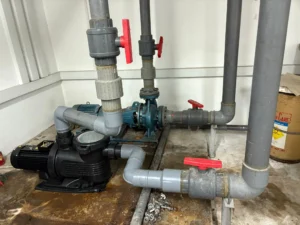
Fibreglass coating can be considered for suitable ageing or damaged pool interiors, but whether it is appropriate depends on the existing substrate and surface condition.
Preparation matters.
Before coating, issues such as:
- cracks;
- loose material;
- unstable surfaces;
- local damage
may require attention.
A new surface system cannot perform properly if it is applied over a substrate that has not been prepared appropriately.
KCN currently offers fibreglass coating as one of its pool-restoration services, alongside retiling.
Pool owners considering resurfacing should therefore ask:
- Why is fibreglass suitable for this pool?
- What preparation will be done?
- How will existing cracks or damaged sections be handled?
- Which areas are included?
- What maintenance will the new finish require?
Retiling vs Fibreglass Resurfacing
These options should not be treated as interchangeable purely on price.
| Consideration | Retiling | Fibreglass Coating |
| Best suited to | Damaged or ageing tiled finishes | Suitable existing surfaces requiring a new finish |
| Work involved | Tile removal/replacement depending on scope | Surface preparation + coating system |
| Partial repair possible? | Often, for localised tile damage | Usually considered as a broader surface system |
| Appearance | Tile-based finish | Continuous coated finish |
| Key question | How much tile damage exists? | Is the substrate suitable for coating? |
The condition of the existing pool should drive the recommendation.
Pool Renovation Should Begin With a Defined Objective
“Pool renovation” is too broad to be useful until the actual problem has been defined.
One project may involve:
- replacing worn tiles;
- resurfacing;
- upgrading pumps;
- replacing filtration;
- changing lighting;
- repairing plumbing.
Another may be almost entirely cosmetic.
Owners should separate:
necessary repair → useful upgrade → optional aesthetic change
before agreeing to a renovation package.
For example, repeated weak circulation may require a hydraulic or equipment assessment rather than a complete visual renovation.
Likewise, replacing perfectly functional equipment simply because surface tiles are ageing may add cost without addressing the original objective.
Maintenance Specialist vs Pool Builder
Existing-pool servicing and new-pool construction are different types of work.
A new swimming pool project can involve:
- structural construction;
- waterproofing;
- hydraulic design;
- drainage;
- electrical systems;
- filtration;
- finishes.
Routine maintenance focuses on keeping an existing operating system functioning.
Some companies work across both areas, but experience in one should not automatically be assumed to cover every aspect of the other.
For new construction or major structural renovation, responsibilities should be clearly allocated between the relevant professionals and contractors.
For an existing pool, maintenance, diagnosis and equipment expertise are usually more immediately relevant.
Equipment Layout Affects Future Maintenance
The pump and filter area may receive little attention when a pool is first built, but its layout can influence servicing for years.
Technicians need reasonable access to:
- pumps;
- filters;
- valves;
- controls;
- unions;
- pipework.
Poor access can make simple servicing more complicated.
During a substantial equipment upgrade, improving valve identification or access can therefore be worthwhile where the existing plant area makes inspection and repair unnecessarily difficult.
Landed-Home Pool Specialists
Private landed-home pools need maintenance plans that reflect the property’s surroundings and actual usage.
Pools can differ considerably even when their dimensions are similar.
A pool below mature trees may collect debris almost every day.
Another may be exposed to little vegetation but used frequently by a family.
These conditions influence:
- skimming frequency;
- basket loading;
- filtration demand;
- water testing;
- equipment workload.
Rather than assuming every landed pool requires an identical maintenance interval, look at what happens between visits.
If the pool consistently deteriorates before the next service, the schedule or scope may need adjustment.
Condominium and Managed Pools
Managed pools generally involve more users, more stakeholders and a greater need for consistent records.
Maintenance reporting can help managing agents or management councils understand:
- water conditions;
- cleaning completed;
- developing equipment issues;
- repairs recommended;
- unusual incidents.
This becomes particularly important when the maintenance technician identifies a problem but approval for repair lies elsewhere.
NEA Requirements: Private vs Licensable Pools
Singapore’s NEA regulates licensable aquatic facilities under the Environmental Public Health framework. NEA’s current guidance states that all licensable aquatic facilities require an Aquatic Facility licence to operate.
Importantly, NEA’s April 2026 FAQ states that an Aquatic Facility licence is not required for an aquatic facility in residential premises.
That distinction matters.
A private landed-home pool should not automatically be described as subject to the same licensing framework as a qualifying facility at a non-residential premise.
For managed or commercial facilities, operators should check the current NEA requirements applying to their specific premises rather than relying on a generic statement that a contractor “handles compliance.”
BCA Registration: Useful Context, Not a Universal Pool Licence
BCA’s Contractors Registration System (CRS) is Singapore’s nationwide registry of construction firms.
BCA currently states that CRS contains around 50 workheads across several registration groups, each with its own requirements. Since 1 June 2025, CRS registration also has broader relevance to construction firms wishing to hire construction S Pass and/or Work Permit holders.
This means BCA registration should be interpreted according to the work being performed.
It should not be described as a single universal licence that every swimming-pool maintenance company must hold.
For routine private-pool maintenance, practical competence in:
- water treatment;
- circulation;
- filtration;
- pool equipment
may be more directly relevant.
For substantial construction or specialist works, relevant registration, builder requirements and other credentials may become more important.
Routine Maintenance vs Corrective Repair
A common source of disagreement is assuming that a recurring maintenance fee covers anything that might fail.
It usually does not unless the agreement specifically says so.
Routine Maintenance May Include
- cleaning;
- testing;
- routine chemical adjustment;
- basket checks;
- standard filter observation;
- basic equipment observations.
Repairs May Be Separate
- pump dismantling;
- replacement parts;
- filter replacement;
- plumbing repair;
- electrical faults;
- severe algae recovery;
- retiling;
- resurfacing.
KCN Pool Services currently lists pool cleaning and maintenance separately from pump repair, filter servicing, plumbing/equipment repair, retiling and fibreglass coating.
That distinction is useful when owners compare service contracts: routine maintenance should have a defined boundary.
Emergency Response Should Be Defined Before an Emergency
A complete circulation failure creates a different level of urgency from a cosmetic surface defect.
For shared pools in particular, owners and managers should understand:
- normal response times;
- emergency contact arrangements;
- what qualifies as urgent;
- whether emergency attendance carries additional fees.
If a guaranteed response time matters, it should appear in the agreement.
Do not assume a company’s usual practice is the same as a contractual service-level commitment.
Comparing Pool-Service Prices
Compare pool specialists by scope before comparing their total price.
A routine cleaning contract, pump repair and complete resurfacing have fundamentally different cost structures.
Even maintenance quotations can vary because of:
- pool size;
- service frequency;
- debris exposure;
- site access;
- included chemicals;
- equipment condition.
For repair work, the equipment model and fault also matter.
For restoration, preparation and finishing can represent a significant part of the project.
A cheaper quotation may simply cover less.
A more expensive quotation may also include unnecessary work.
The useful comparison is like-for-like scope.
What Should a Swimming Pool Specialist Inspect Before Quoting?
The answer depends on the job, but a quotation should generally follow enough assessment to support the proposed work.
Maintenance
Consider:
- pool size;
- surroundings;
- existing condition;
- equipment;
- access;
- expected visit frequency.
Circulation Problem
Inspect:
- baskets;
- filters;
- valves;
- pump;
- visible pipework.
Green or Cloudy Pool
Consider:
- recent water condition;
- chemistry;
- circulation;
- filtration;
- maintenance history.
Surface Restoration
Assess:
- tile or coating condition;
- extent of damage;
- cracks;
- substrate;
- preparation requirements.
Water-Loss Problem
Consider:
- visible plumbing;
- fittings;
- operating conditions;
- potential pool-structure issues.
The quotation should follow what was found rather than simply matching the customer to the company’s most expensive package.
Choosing Swimming Pool Specialists in Singapore
A good starting point is to match the provider’s experience to the actual problem.
Ask different questions depending on the work.
For Maintenance
- What happens during every visit?
- Is water tested before adjustment?
- Are filters and equipment observed?
- How are abnormal conditions reported?
For Pumps and Filters
- Is the fault diagnosed before replacement is suggested?
- What is repairable?
- Which parts or equipment are included?
For Plumbing
- Where is the suspected fault?
- How will it be confirmed?
For Restoration
- What preparation is required?
- Is the problem localised or widespread?
- What is included in reinstatement?
For Managed Pools
- What records are provided?
- Who communicates abnormal conditions?
- Which regulatory responsibilities remain with the facility operator?
KCN Pool Services is one Singapore provider whose current range covers pool cleaning, pump repair and replacement, filter servicing, green-pool restoration, plumbing/equipment repair, retiling and fibreglass coating.
For a guest-post reader, however, the relevant question is not how many services a company advertises. It is whether the recommended service matches the actual condition of the pool.
Red Flags When Hiring a Pool Specialist
Expensive Equipment Is Recommended Without Diagnosis
A pump should not automatically be replaced because flow has weakened if the filter, baskets, valves and pipework have not been considered.
Every Water Problem Is Solved With More Chemicals
Recurring green or cloudy water deserves investigation of circulation and filtration as well as chemistry.
The Quotation Says “Complete Service” Without Defining It
Generic descriptions make it difficult to know what is excluded.
Repair and Replacement Are Not Distinguished
Ask why replacement is necessary when repair might be possible.
Warranty Terms Are Only Verbal
The written terms matter more than a general assurance.
Guaranteed Emergency Response Is Not in the Contract
A normal response practice is not necessarily a service-level commitment.
Maintenance Records Help Diagnose Recurring Problems
Basic service records can provide useful context when the same problem returns.
Owners can keep track of:
- maintenance dates;
- recurring water problems;
- major chemical corrections;
- filter servicing;
- pump repairs;
- plumbing work;
- replacement equipment;
- restoration history.
Patterns then become easier to see.
If cloudy water repeatedly follows unusually heavy pool use, that information can inform maintenance.
If the same mechanical fault returns after several repairs, replacement may become easier to justify.
For condominiums and other managed properties, documentation is even more useful because technicians, managing agents and decision-makers can change.
Frequently Asked Questions About Swimming Pool Specialists in Singapore
What Does a Swimming Pool Specialist Do?
A swimming pool specialist may provide routine cleaning, water treatment, pump and filter servicing, plumbing repair, green-pool recovery or surface restoration. The exact scope varies by company, so owners should choose according to the specific pool problem.
How Do I Know if I Need Maintenance or Repair?
Routine maintenance is appropriate when a functioning pool needs recurring cleaning, testing and normal equipment observation. Repair becomes necessary when a pump, filter, plumbing component, surface or another part of the system has developed a fault.
How Often Should a Private Pool Be Serviced?
There is no universal interval for every private pool. Usage, rainfall, vegetation, water stability, owner involvement and filtration performance all influence how often attention is needed.
When Should a Pool Pump Be Replaced?
Replacement becomes more reasonable when damage is extensive, breakdowns repeatedly return, suitable parts are unavailable or repair is no longer economical. Weak flow alone is not enough to prove the pump has failed.
Can a Pool Specialist Fix Green Water?
Many pool-maintenance providers offer green-pool recovery. A lasting solution should investigate sanitisation, circulation and filtration rather than only clearing the visible algae.
When Does a Pool Need Retiling or Resurfacing?
Loose, cracked or deteriorating tiles may justify localised or broader retiling. Widespread deterioration of a suitable pool interior may justify a resurfacing assessment. Ordinary staining alone does not automatically mean complete restoration is required.
Does Every Swimming Pool Specialist Need BCA Registration?
No universal BCA pool-maintenance licence exists. BCA’s Contractors Registration System contains different construction workheads, and the relevance of registration depends on the work being undertaken.
What Should a Pool-Maintenance Contract Include?
A useful contract should specify visit frequency, cleaning tasks, water testing, routine chemical treatment, filter care, equipment observations, reporting and which repairs or materials are charged separately. Any guaranteed response time should also be written into the agreement.
Define the Pool Problem Before Choosing the Specialist
Swimming pool specialists can support much more than routine cleaning, but different pool problems require different capabilities.
A landed-home pool needing recurring care is not the same project as a condominium with repeated filtration problems, a failed pump or an ageing pool requiring surface restoration.
The most useful sequence is:
Identify the symptom → Diagnose the system → Define the service → Compare relevant specialists → Review the written scope
For owners and managing agents who prefer professional assistance, KCN Pool Services provides swimming pool maintenance, equipment repair and restoration services in Singapore. As with any provider, the proposed work should be evaluated according to the pool’s condition, the diagnosis and what is actually included in the quotation.
The right swimming pool specialist is ultimately not the company with the longest service menu. It is the provider that can explain what the individual pool needs and carry out that work without turning every small issue into an unnecessary major repair.